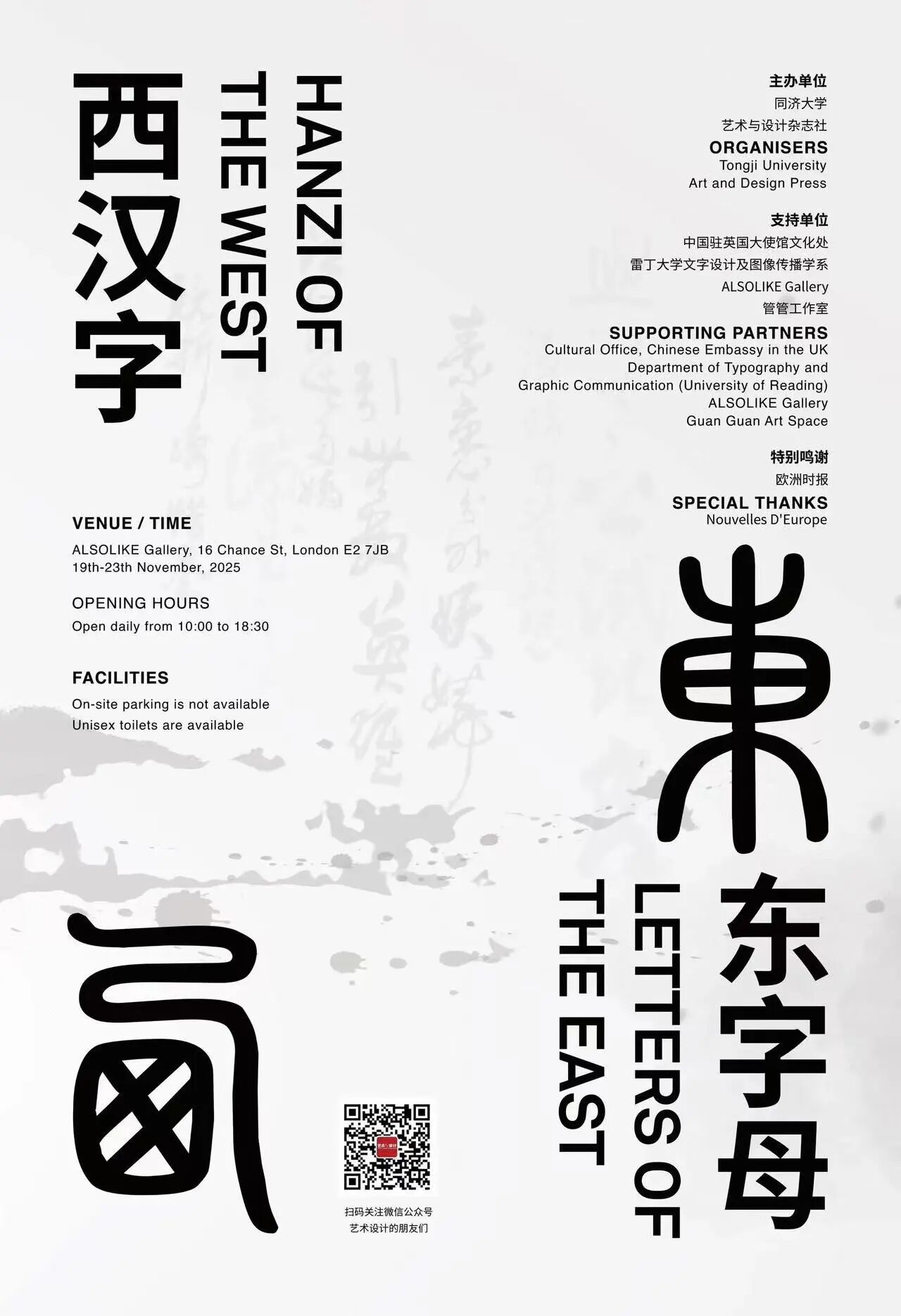
As a cornerstone of the time-honored Chinese civilization, Chinese characters, known in Mandarin Chinese as Hanzi, are deeply rooted in people’s daily life, capturing their emotions and memories. Amid the wave of informatization, they constantly break boundaries, with new forms and vitality, becoming a vital bridge between Chinese and global civilizations. On November 22, the “Hanzi of the West · Letters of the East” special exhibition, co-hosted by Tongji University and Art and Design Press, officially opened at the Alsolike Gallery in London. More than 100 original Hanzi themed works with historical and cultural heritage and innovative design concepts were displayed in the exhibition. They covered various categories, such as bookbinding, special costumes, art installations, and creative cultural products. It has attracted representatives from China and the UK in politics, business, and culture, gathering together for this cultural exchange event.
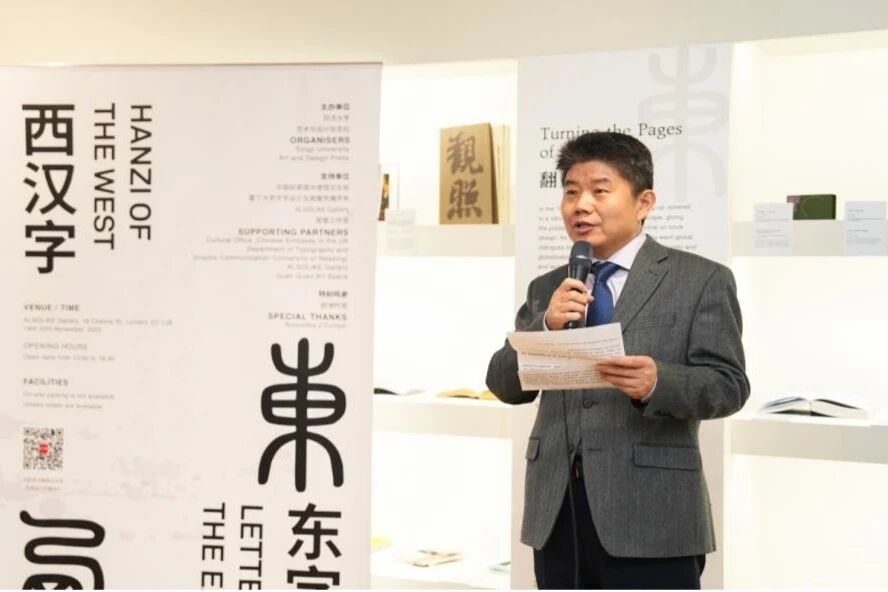
At the opening ceremony, Li Liyan, Minister Counselor of the Chinese Embassy in the UK, delivered a speech stating that writing is the carrier of inheriting civilization, and language is a bridge to enhance understanding. The Chinese language belongs not only to China, but also to the world, and is a public cultural product contributed by the Chinese people to all mankind. He also emphasized that this exhibition is the result of cultural exchanges between China and the UK, further deepening the depth of dialogue among civilizations. It responds to the Global Civilization Initiative proposed by Chinese President Xi Jinping, promoting the continuous deepening of mutual learning and people-to-people interaction between China and the UK with culture and creativity as a link.
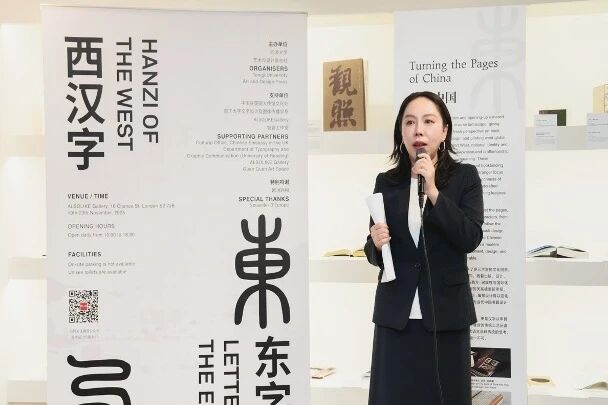
Wu Yun, Dean of the School of Foreign Studies, Tongji University, mentioned in her speech that Hanzi are not only a writing system but also a “living design philosophy”. The multi-dimensional media and curatorial methods adopted by the exhibition break down language barriers, allowing audiences to “read, wear, touch, and share” Hanzi and perceive their multiple contexts from history to the future. She hoped that every audience who walked into the exhibition hall could feel the warmth, curiosity and kindness behind each work while deriving visual pleasure.
Professor Yukteshwar Kumar, former Deputy Mayor of Bath, UK, and Director of Chinese and English Interpretation and Translation Program at University of Bath, compared Hanzi to a “golden bridge” between Eastern and Western civilizations. As a sinologist and translation educator, he noted that Hanzi is not only a research object but also a bridge connecting two ways of thinking. He mentioned that this exhibition shows how words continue to evolve and grow in daily life, digital media, and cross-cultural communication, and become a visual contact point and emotional resonance for dialogue and connection between Chinese and British audiences. He sincerely wished the exhibition would become a new starting point for many people to understand China and fall in love with Hanzi.
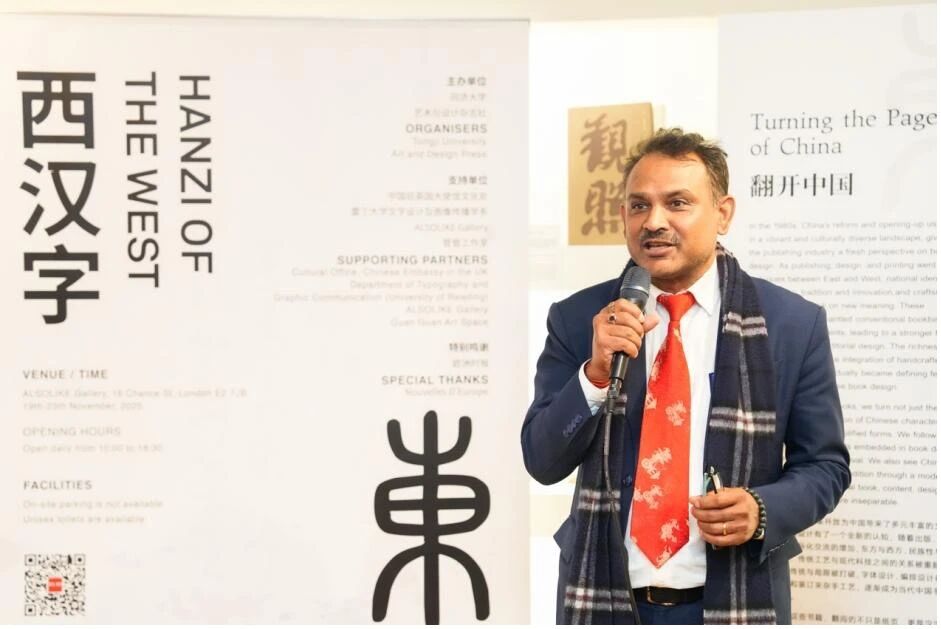
This exhibition focuses on the concept of “Dialogue between Hanzi and letters” with four sections of “China-UK Intellectual Encounters”, “Turning the Pages of China”, “Elegant Characters in Adornment”, and “Hanzi Renewal”. Relying on immersive spaces, creative installations, and design works, it systematically presents the cultural heritage and visual tension of Hanzi, telling the story of how writing, as a carrier of civilization, builds a bridge of understanding and resonance between China and the UK. Among them, “China-UK Intellectual Encounters” shows the origin and evolution of Hanzi, looking back at the indissoluble bond between characters and Sino-British cultural exchanges. Meanwhile, “Turning the Pages of China” focuses on the graphic expression of Hanzi in contemporary book design, showing how fonts and typography have become the cultural key to “Unlocking China”. “Elegant Characters in Adornment” integrates Hanzi elements into daily clothing, accessories, and craft design, showing how the beauty of words extends to the details of life in tangible forms. Finally, “Hanzi Renewal” looks to the future, exploring the resonance trajectory of Hanzi in digital and interactive contexts.
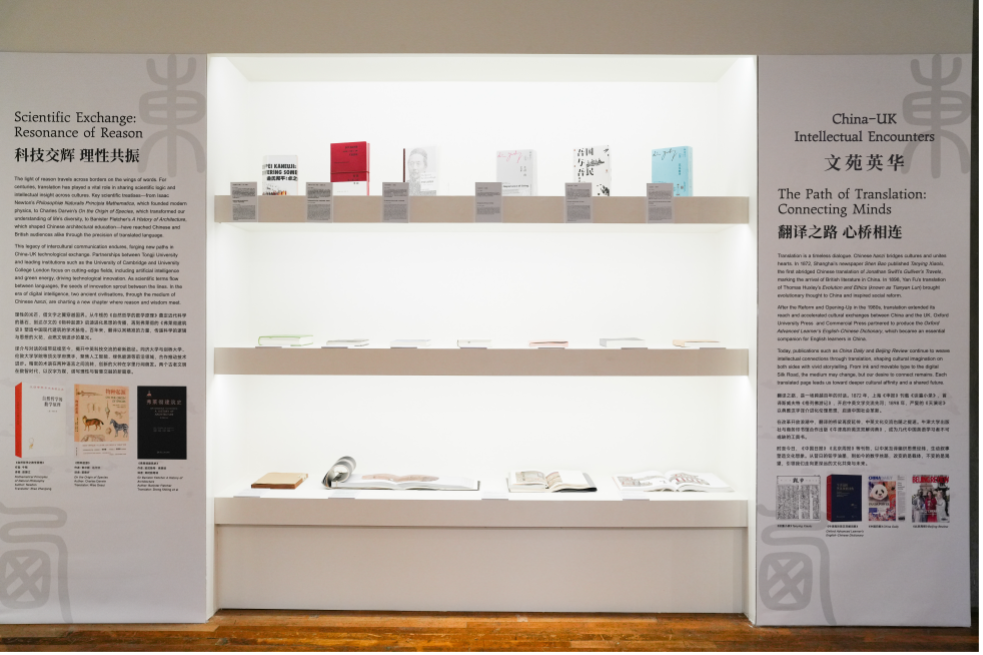
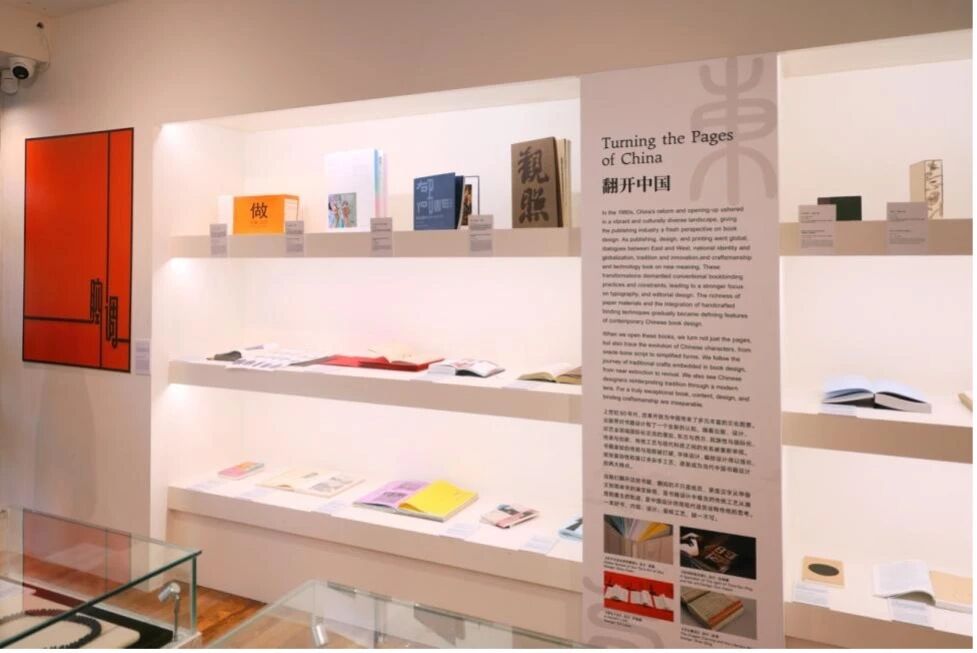
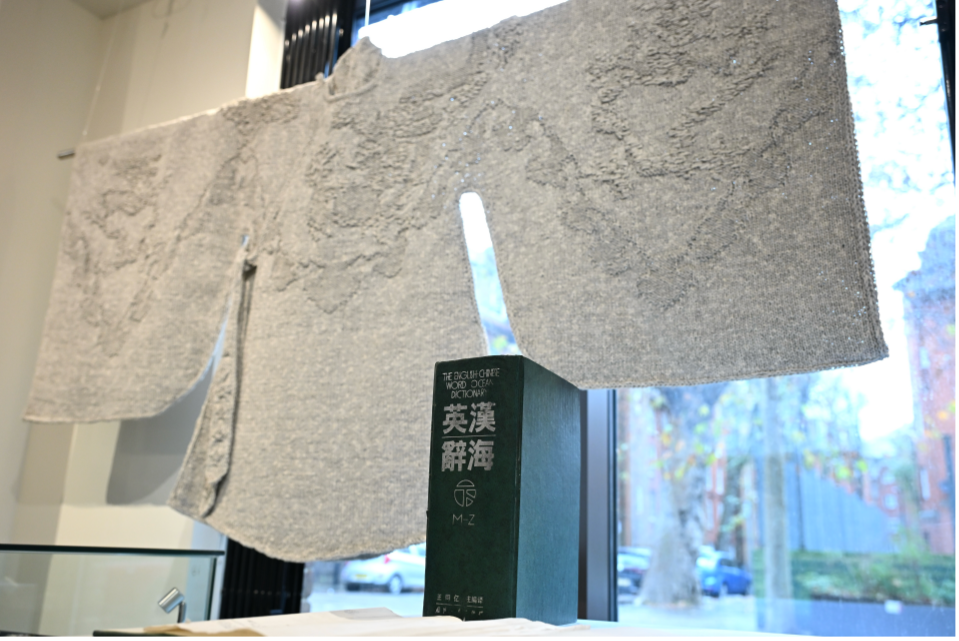
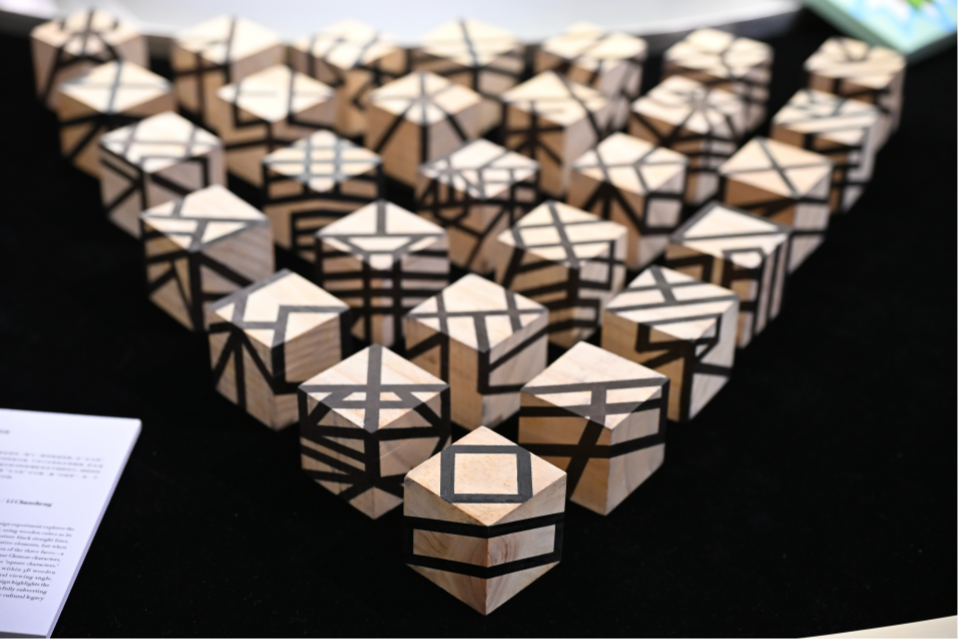
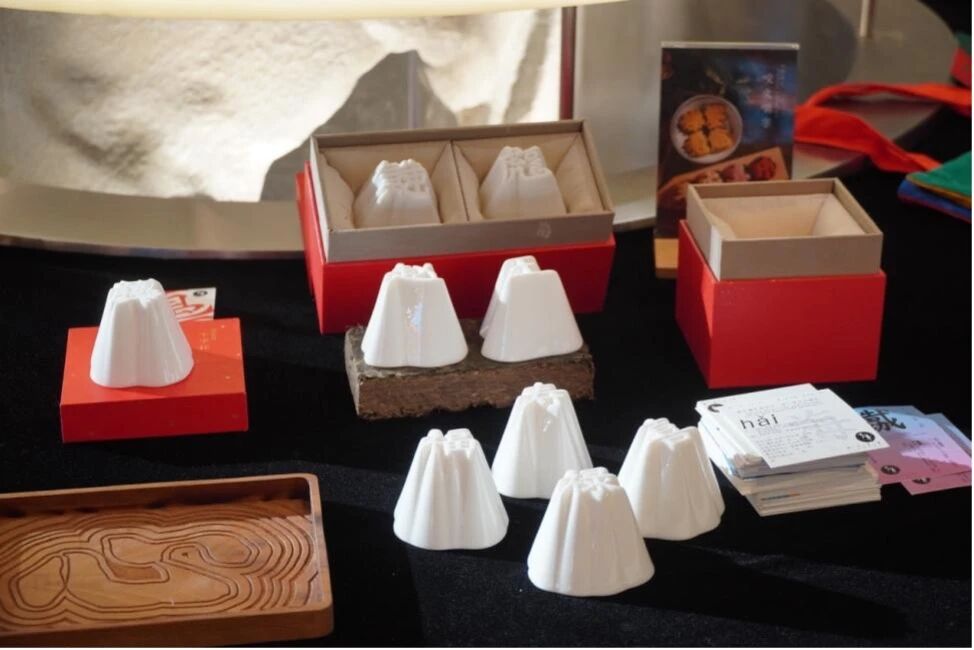
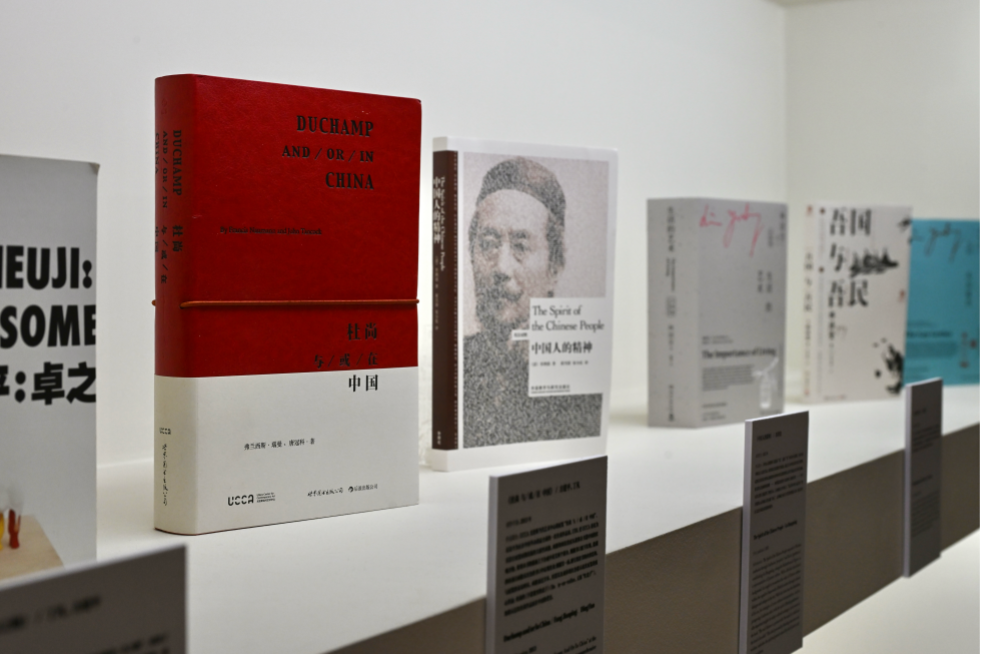
At the exhibition, many local audiences said they truly felt the unique beauty and cultural charm of Hanzi through the exhibition. They believed the exhibition successfully translated the concepts behind Hanzi, making them “touchable, amiable and resonant”. A student from the School of Oriental and African Studies, University of London, described the exhibition as “interesting, friendly, and full of contemporary sense,” adding that she had remembered the structure of 3D Hanzi “shui” (water) forever through the exhibition, calling the visit an intuitive and pleasant cultural learning experience.
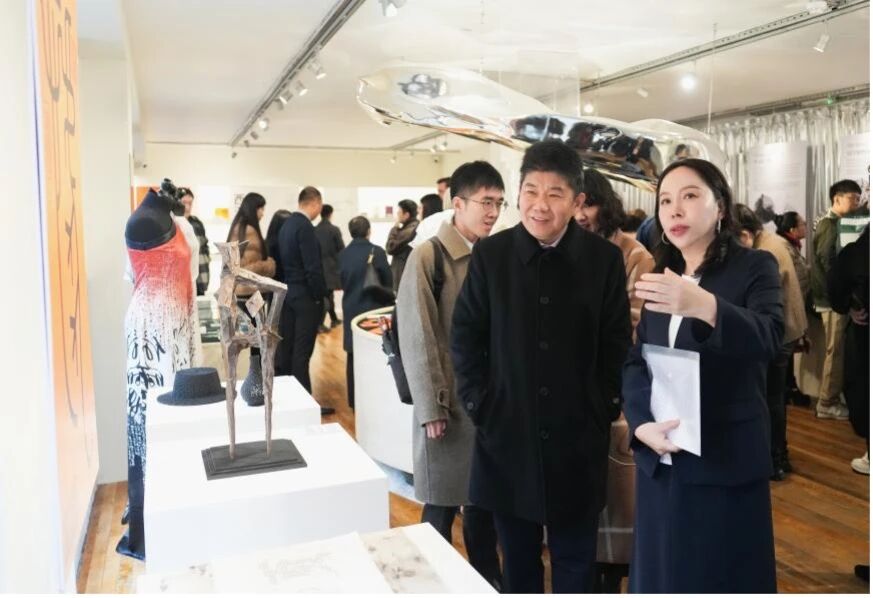
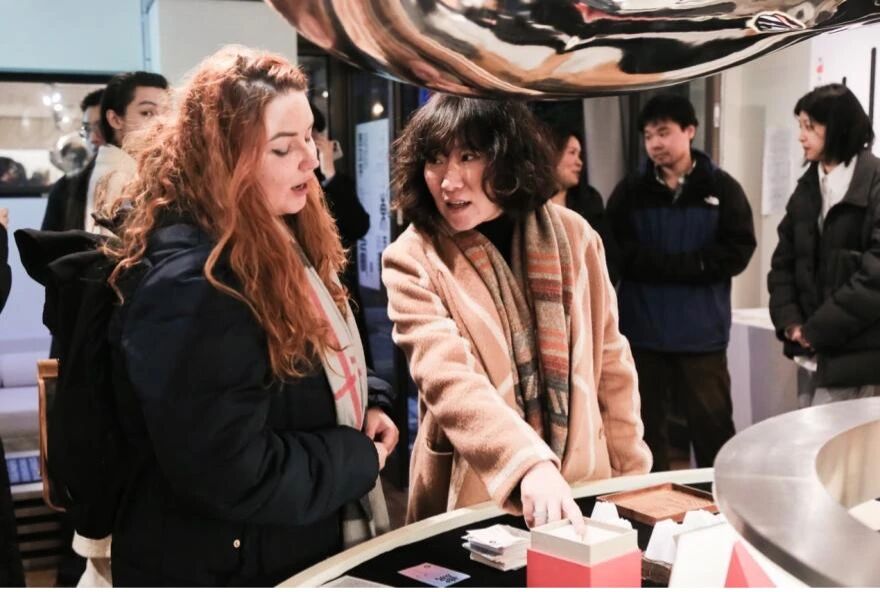
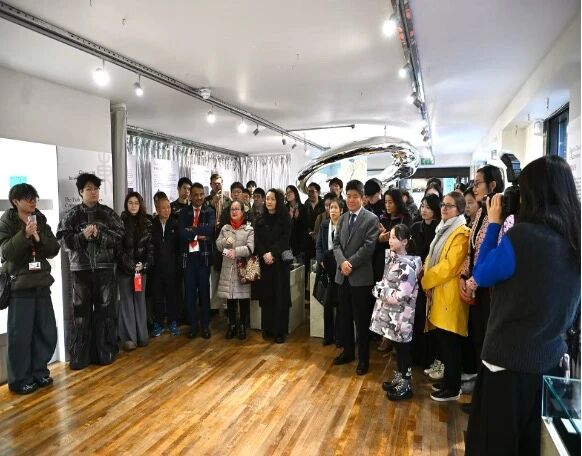
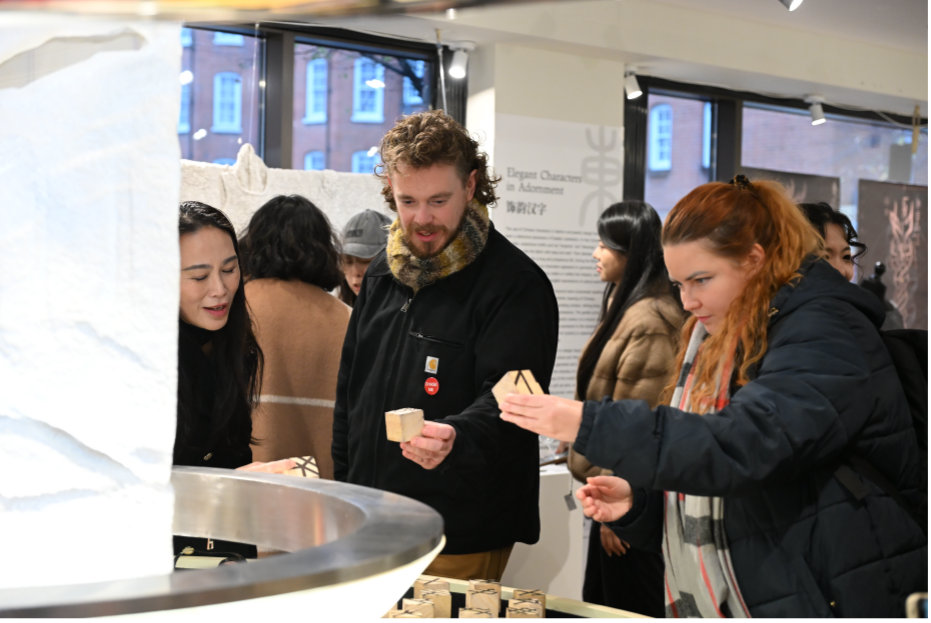
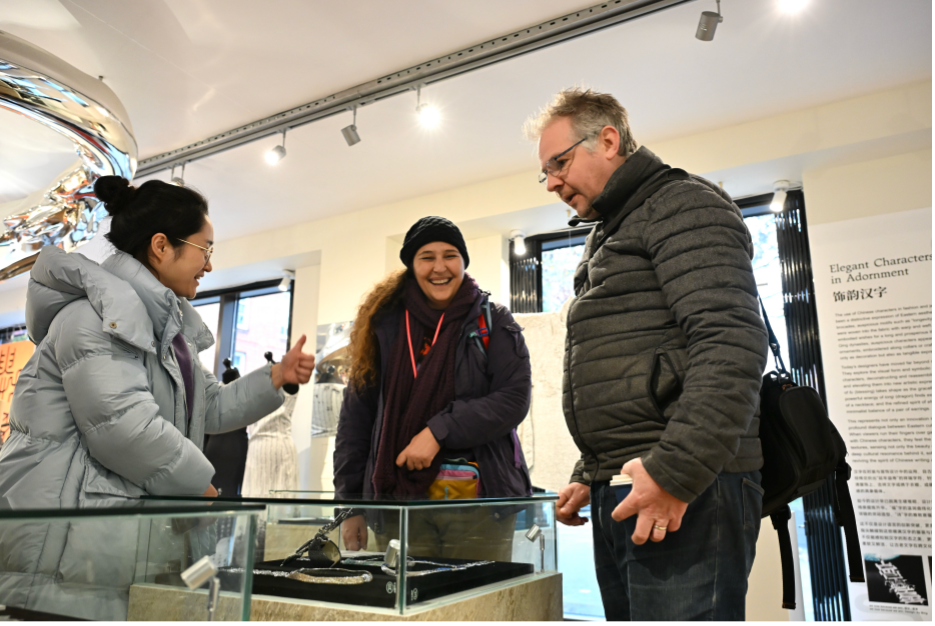
This cross-border exhibition integrating language, design, and dialogue among civilizations is highly anticipated. In the exhibition, audiences can appreciate the innovative thinking and rigorous craftsmanship integrated by Chinese designers in their creations, gain a deeper understanding of the Chinese people’s pursuit and love for a better life, and truly feel the sense of happiness, gain, and friendship extended to the British people. On the one hand, the exhibition opens a window for British audiences to understand Chinese culture, and on the other hand, it uses Hanzi—an important carrier of civilization—to convey humanistic warmth across languages and borders, continuously injecting profound and powerful cultural momentum into Sino-British relations.
The exhibition is co-supported by the Cultural Office of the Chinese Embassy in the UK, the Department of Typography and Graphic Communication at University of Reading, Alsolike Gallery, and Guan Guan Art Space, with special thanks to Nouvelles d’Europe Culture and Media Group.