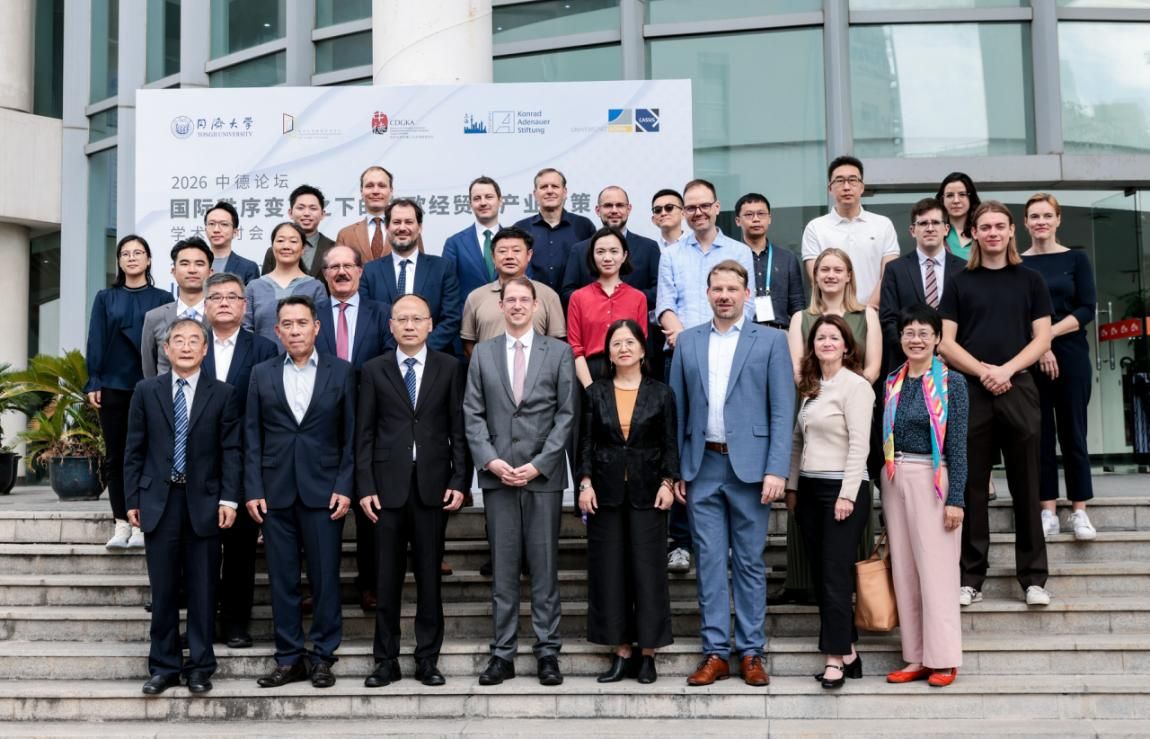
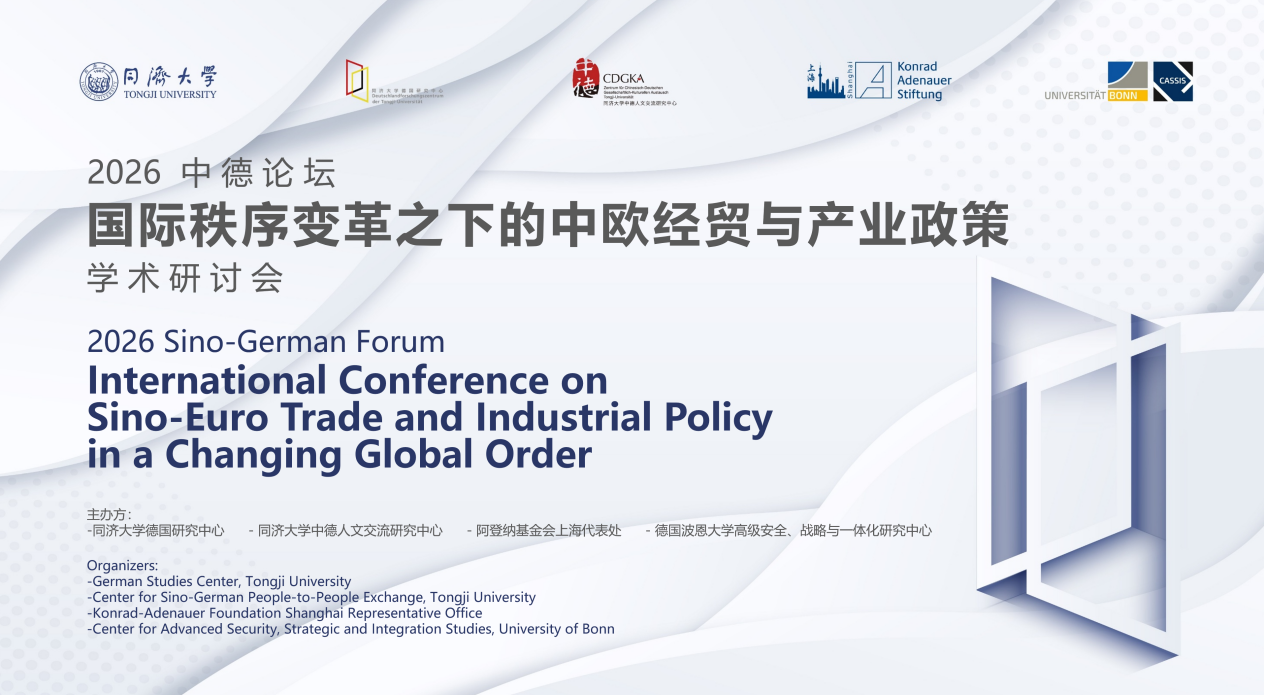
The 2026 Sino-German Forum: International Conference on Sino-Euro Trade and Industrial Policy in a Changing Global Order was held at Tongji Universityfrom September 18 to 19.
More than 60 scholars, experts and business representatives from universities, think tanks, companies and other institutions in China and abroad attended the conference. Participants came from Tongji University, Fudan University, Beijing Foreign Studies
University, Ningbo University, Xi’an Jiaotong-Liverpool University, the University of Bonn, Ruhr University Bochum, University College London, Aalto University, the University of North Carolina at Chapel Hill, the China Institute of International Studies, the Shanghai Institutes for International Studies, the Shanghai Center for International Economic and Trade Strategy, the European Council on Foreign Relations, the Konrad-Adenauer-Stiftung, as well as Infineon Technologies, the German Chamber of Commerce in China, PwC and the British Chamber of Commerce in China, among others. They exchanged views on the challenges and opportunities facing Sino-Euro trade and industrial policy amid changes in the international order.The conference was jointly organized by theGerman Studies Centerat Tongji University, the Konrad Adenauer Foundation Shanghai Representative Office, and the Center for Advanced Security, Strategic and Integration Studies(CASSIS)at the University of Bonn.
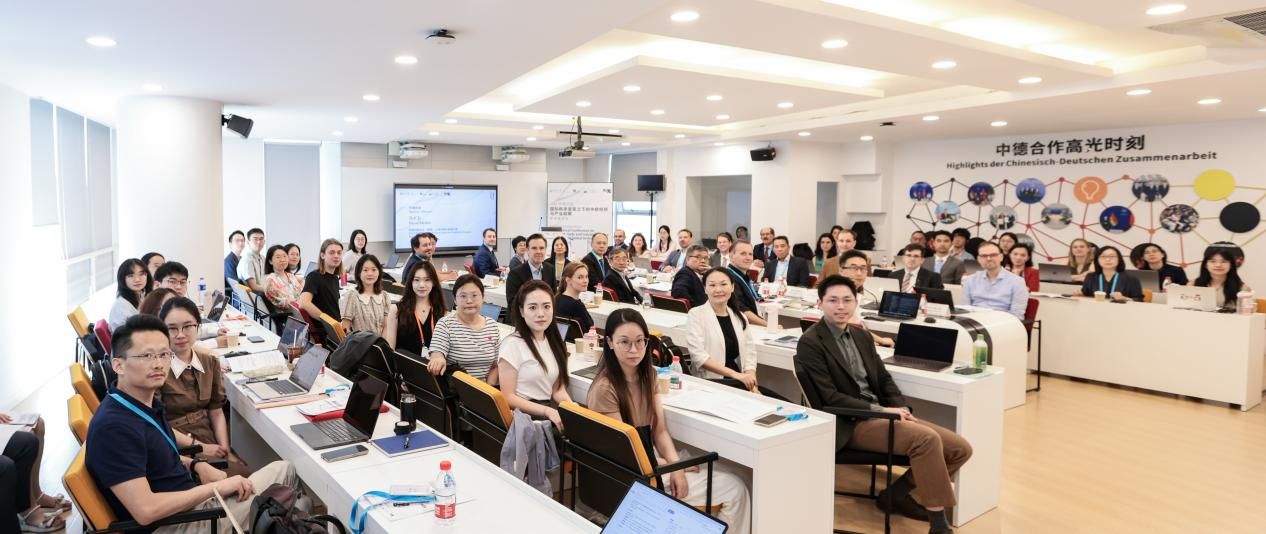
Professor WUHuiping, Deputy Director of theGerman Studies Centerat Tongji University, chaired the opening session. ProfessorZHENGChunrong, Director of theGerman StudiesCenter, ProfessorMaximilian Mayer of the University of Bonn, and David Merkle, Chief Representative of theKonrad Adenauer Foundation Shanghai Representative Office, delivered opening remarks.ProfessorZHENGhighlighted both the opportunities and challenges facing Sino-Euro economic, trade and industrial cooperation, calling for pragmatic dialogue and greater cooperation. Professor Mayer stressed the importance of academic and people-to-people exchanges, while David Merkle noted that the Forum’s 14 consecutive editions reflect a shared commitment to dialogue and cooperation.
Theconferencefeatured five sessions covering the multilateral trading order; industrial policy and evolving economic models; security challenges in Sino-European relations; market access, competitiveness and regulation; and innovation, research, technology and the future of Sino-European cooperation. Participants discussed how China and Europe can manage differences while maintaining economic and technological cooperation, and explored opportunities for collaboration in areas including trade and investment, industrial development, green transition, energy, technology and research.
In the closing discussion, participantsspoke highly of the academic value of the conference and expressed their commitment to further expanding Sino-European academic exchanges. They called for continued dialogue and pragmatic cooperation to manage risks arising from growing competition and interdependence, while preserving space for exchanges among businesses, research institutions and wider society. Participants also called for broader participation in future editions of the Forum, including more European countries, young scholars, business representatives and perspectives from the Global South, and for continued dialogue on issues such as digital sovereignty, supply chains, climate change and technology governance.
The Sino-German Forum is an annual institutionalized platform jointly initiated by theGerman Studies Centerat Tongji University, theKonrad Adenauer Foundation Shanghai Representative Office, and the Global Studies Center at the University of Bonn. Launched in 2012,ithas been held for 14 consecutive editions,bringingtogether Chinese and international scholars and experts to discuss developments in German and European domestic and foreign affairs, as well as major issues in Sino-German and Sino-European relations, including politics, diplomacy, trade, economic relations and people-to-people exchanges.Over the years, the Forum has developed into an important platform for academic and think tank exchanges and cooperation between China, Germany and Europe. It also serves as an important link through which theGerman Studies Centerat Tongji University advances university-based think tank diplomacy and people-to-people exchanges.The Sino-German Forum was recognized as a reference case for an international branded conference in the AMI Evaluation of Chinese Think Tanks, a review of a decade of development of new-type think tanks with Chinese characteristics.


