On August 28, 2026, the release conference of theAnnual Report on China-Germany Relations (2025–2026)and the Seminar on China-Germany Relations were successfully held at Tongji University. Organized by theGerman Studies Centerat Tongji University, the event brought together more than 30 experts, scholars, faculty members, and students from institutions including the China Institute of International Studies, the Chinese Academy of Social Sciences, Renmin University of China, Beijing Foreign Studies University, the Association for Friendship between China and Germany, the Shanghai Institutes for International Studies, the Shanghai Society for European Studies, Fudan University, East China Normal University, Shanghai International Studies University, Central China Normal University, and Tongji University. Participants engaged in in-depth discussions on the latest developments in various aspects of China-Germany relations.
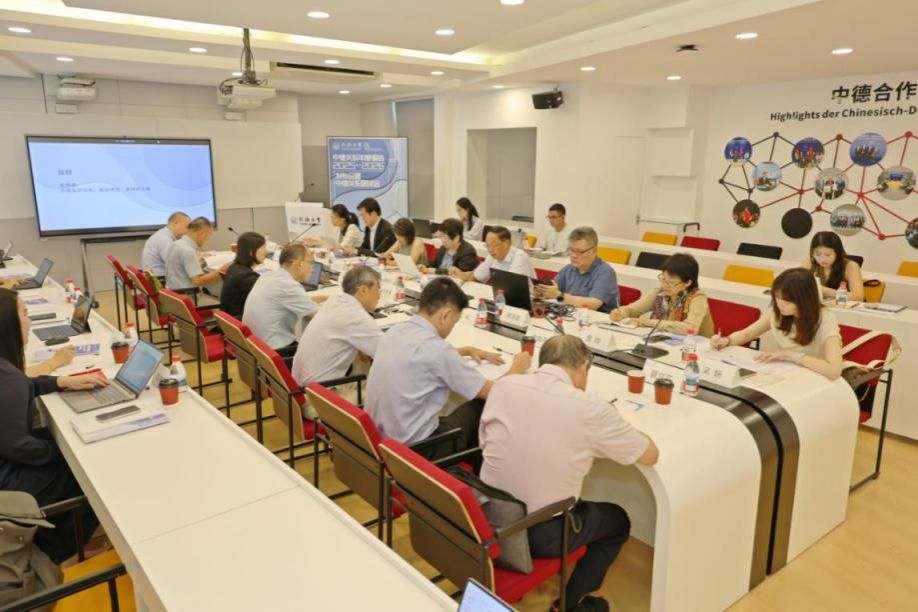
Professor Wu Huiping, Deputy Director of theGerman Studies Centerat Tongji University and the lead coordinator of theAnnual Report on China-Germany Relations, chaired the conference and introduced the overall framework and approach of theAnnual Report on China-Germany Relations (2025–2026). She noted that this is the second annual report prepared by theGerman Studies Center. The report aims to serve China’s national strategies and policy planning concerning Germany and Europe, while providing dynamic tracking of the development of China-Germany relations. As a think tank report, it seeks to offer in-depth, objective, rational, and academically grounded analysis. Compared with the first edition, this year’s report adds a new section on “Security” to the original six sections covering politics, economic and trade relations, global governance, scientific and technological innovation, education andsocial andcultural exchanges, and cooperation between localities and cities, responding to the increasingly prominent trend toward the securitization of international relations. The report also introduces annual keywords, with this year’stheme identified as“Strategic Realignment.”
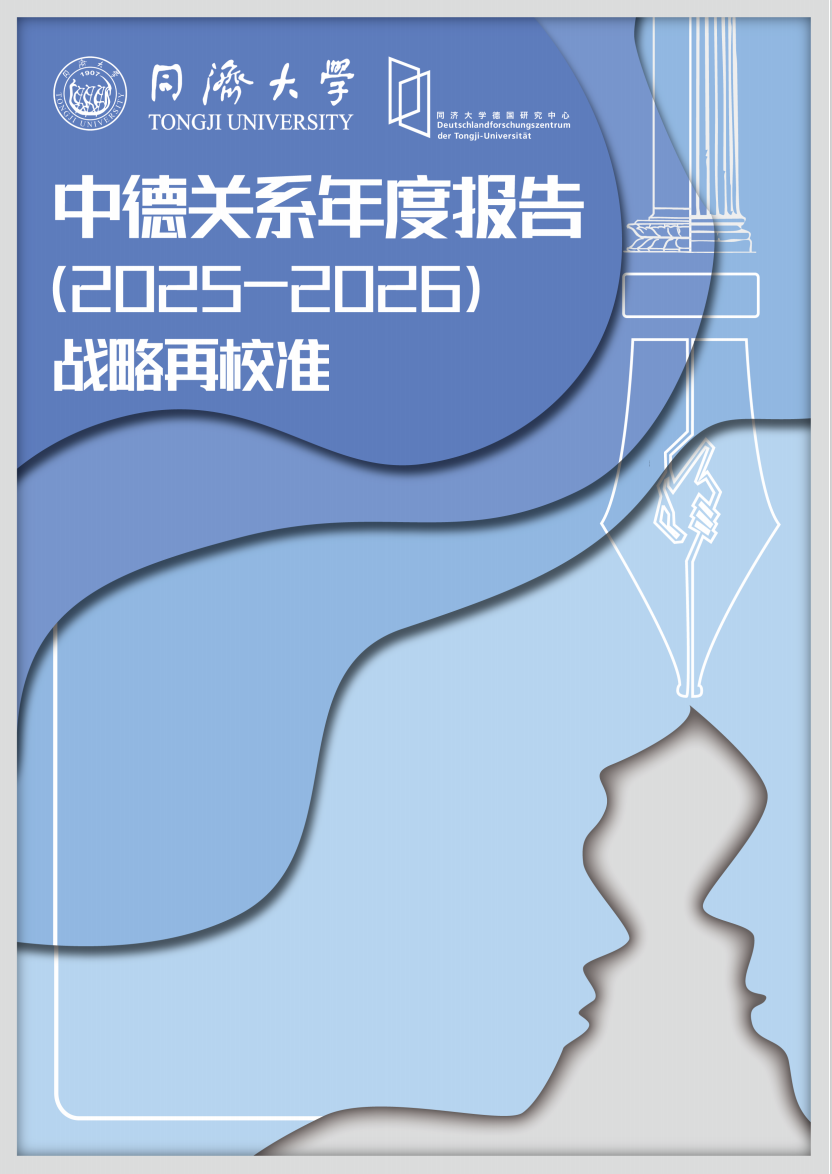
According to theCenter, each annual report is submitted to government departments at various levels, including the Ministry of Foreign Affairs, the Publicity Department of the Communist Party of China, and the Ministry of Education, and has received recognition and support from relevant institutions. The firstAnnual Report on China-Germany Relations, namely theAnnual Report on China-Germany Relations (2024–2025), received the First Prize for Outstanding Think Tank Achievements in the 2025 CTTI Awards. In addition, the publication of the report has helped promote exchanges and cooperation between Chinese and German think tanks and scholars.
During the thematic seminar, participating scholars engaged in in-depth discussions around three major thematic sessions. The first session focused on“Politics and Security.”Scholars discussed a range of issues, including Germany’spolitical and security concerns and China-Germany relations; Germany’sChina policy under the influence of principled realism; China-Germany economic and trade relations and related reflections; the development of disruptive technologies and Europe; the rise, origins, and impact of Germany’s new right-wing party, the Alternative for Germany (AfD); and the dilemma of Germany’s dual identity in its foreign policy.
The second session, themed“Major-Power Relations and Global Governance,”featured extensive exchanges on topics such as changes in the role of the West in global governance from the perspective of Germany-U.S. relations; China-Germany cooperation in a decentralized global governance system; the characteristics and trends of China-U.S.-Europe relations in the new era; and new developments in the Franco-German axis within the European Union and their implications for China-Europe relations.
The third session focused on“Economic, Trade and Technological Relations.”Experts conducted systematic discussions on the modernization reform agenda of the Merz government and its implications; an assessment of the strategic intentions behind the EU’s and Germany’s current protectionist economic policies toward China; new developments in Germany’s economic security policy toward China; and digital cooperation between Chinese and German local governments amid competitive interdependence. During the open discussion session, scholars further exchanged their views on the issues raised in the three thematic sessions.
In his closing remarks, Professor Zheng Chunrong, Secretary of the Party Committee of the School of Foreign Languages at Tongji University and Director of theGerman Studies Center, expressed his gratitude to all the experts for their contributions to the report and the discussions. He noted that theAnnual Report on China-Germany Relationsaims to systematically review the development of China-Germany relations and identify future trends. The in-depth exchanges among experts at the seminar had also provided valuable ideas and insights for the preparation of the next edition of the report. Professor Zheng also shared his views on how to better tell China’s story and promote mutual understanding between China and Germany. He further raised three fundamental questions for reflection:What is happening in Germany? Where is Germany heading? And what should we do?
The seminar injected new momentum into academic exchanges and research cooperation in the field of China-Germany relations, while also providing important insights and references for the preparation of the next edition of theAnnual Report on China-Germany Relations.


